
Reported by Watch World Media
WASHINGTON, D.C. — As cyberattacks increasingly target critical infrastructure, military systems, and government networks worldwide, senior U.S. defense officials are emphasizing that cybersecurity is no longer viewed as simply an IT issue — but as a core component of national defense strategy.
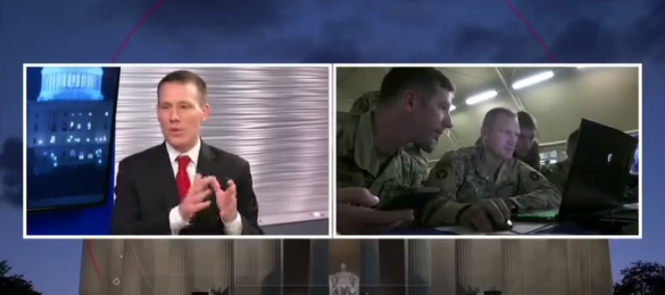
Among the leading voices shaping that approach is , the current Principal Cyber Advisor (PCA) to the Secretary of the Army and the Army Chief of Staff.
Pugh has repeatedly described cybersecurity as a “no-fail mission,” underscoring the Army’s growing focus on resilience, modernization, and preparedness against increasingly sophisticated digital threats from foreign adversaries.
A Key Cybersecurity Leadership Role
Since assuming the role in June 2025, Pugh has advised Army leadership on cyber readiness, modernization priorities, budgeting, emerging technologies, and operational strategy.
The PCA position, established by Congress in 2019, serves as one of the Army’s highest-level cyber policy and strategy posts.
Before entering the role, Pugh worked in cybersecurity policy, national security law, and emerging technology research. His background includes service as a U.S. Army Reserve officer, legal instruction at The Judge Advocate General’s Legal Center and School, and policy work focused on cyber threats, artificial intelligence, and data privacy.
He was also previously affiliated with organizations such as the Army Cyber Institute at West Point and the R Street Institute.
Cybersecurity as a “No-Fail Mission”
One of Pugh’s central themes has been the vulnerability of defense-critical infrastructure supporting U.S. military readiness.
The Army operates hundreds of installations across the country, many of which rely heavily on civilian-managed utilities such as power grids, telecommunications systems, water infrastructure, and natural gas networks.
Officials have warned that cyberattacks targeting these systems could disrupt mobilization capabilities during a national emergency or conflict scenario.
The concern has intensified following incidents linked to state-sponsored cyber groups, including campaigns attributed to Chinese-linked actors such as Volt Typhoon, which U.S. officials have accused of targeting critical infrastructure networks.
According to public remarks from Army leadership, pilot programs are currently underway to strengthen installation resilience and improve coordination between military and private-sector infrastructure providers.
Artificial Intelligence and Future Warfare
Pugh has also emphasized the growing role of artificial intelligence in both cyber defense and military operations more broadly.
Army modernization efforts increasingly focus on integrating AI-driven systems capable of accelerating threat detection, network defense, automation, and operational decision-making.
Defense officials argue that adversaries including , , , and continue investing heavily in cyber and AI-enabled capabilities, increasing pressure on the United States to maintain technological superiority.
Pugh has publicly warned against slowing innovation in areas such as AI and autonomy, arguing that adversaries are unlikely to pause development efforts.
Workforce and Recruitment Challenges
Another major focus for Army cyber leadership is workforce development.
Like much of the broader cybersecurity sector, the military faces growing competition for highly skilled cyber professionals. Officials have promoted initiatives such as the Cyber Excepted Service (CES), designed to accelerate hiring and improve retention of technical talent.
Army leaders have also stressed the importance of partnerships with universities, private industry, and technology firms to close capability gaps and modernize acquisition processes.
Programs such as the Army’s FUZE initiative aim to increase collaboration between defense agencies and commercial innovators.
Part of a Broader National Strategy
The Army’s evolving cyber posture aligns with the broader direction of the Trump administration’s 2026 cybersecurity strategy, which places greater emphasis on deterrence, infrastructure protection, rapid response capabilities, and technological dominance.
The strategy calls for stronger federal coordination, expanded public-private partnerships, and more aggressive action against hostile cyber actors targeting U.S. interests.
Cybersecurity as National Power
The growing prominence of roles like Pugh’s reflects a larger shift in how cyber operations are viewed within national defense planning.
Rather than treating cybersecurity solely as a technical support function, military planners increasingly regard cyberspace as a warfighting domain alongside land, sea, air, and space.
As threats continue evolving, officials say resilience, rapid adaptation, and technological innovation will remain central to maintaining military readiness and protecting the infrastructure that underpins both national security and civilian life.
Reporting from Washington, D.C., this is Watch World Media.
Watch World Media will continue bringing coverage on cybersecurity, defense modernization, emerging technologies, and national security developments around the world.