
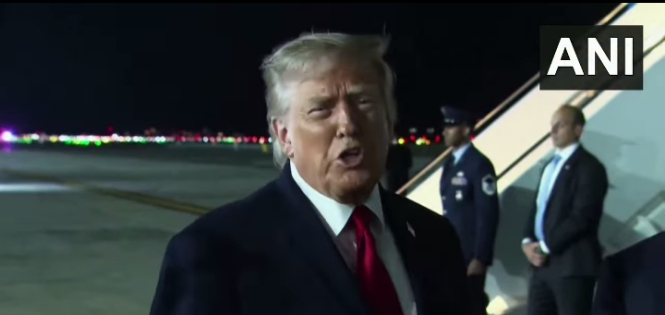
Image credit Ani/x
By Watch World Media | June 9, 2026
Washington, D.C. — President Donald Trump said Monday that Israel and Iran have agreed to halt direct military exchanges following a weekend escalation, while negotiations on a broader agreement aimed at preventing Iran from obtaining nuclear weapons have entered what he described as their “final throes.”
Speaking to reporters after attending an NBA Finals game and following a phone conversation with Israeli Prime Minister Benjamin Netanyahu, Trump expressed confidence that recent hostilities would not derail ongoing diplomatic efforts.
“He was hit, and he hit back. I can’t blame him for that,” Trump said, referring to the exchange of strikes between Iran and Israel. “Now they’ve called it quits. So they’re gonna leave each other alone for another week or something. They both agreed, through me, to stop.”
The comments come after one of the most significant flare-ups between Israel and Iran since a fragile ceasefire was established earlier this year.
Temporary Calm After Weekend Escalation
Over the weekend, Iran launched missiles toward Israel, prompting Israeli retaliatory strikes. The exchange raised fears that months of relative stability could unravel into a broader regional conflict involving additional actors across the Middle East.
Despite the escalation, Trump indicated that both sides have signaled a willingness to pause direct military action while diplomatic negotiations continue.
Neither Israeli nor Iranian officials immediately provided public confirmation of Trump’s characterization of the arrangement, though no major new direct exchanges had been reported following the latest round of strikes.
Nuclear Negotiations Enter Critical Stage
Trump also offered an optimistic assessment of ongoing negotiations surrounding Iran’s nuclear program.
According to the president, discussions are focused on reaching an agreement that would permanently prevent Iran from acquiring nuclear weapons.
“We’re in the final throes of a very good deal,” Trump said. “A deal that makes sure Iran never gets a nuclear weapon in any way or form.”
The administration has repeatedly emphasized that preventing a nuclear-armed Iran remains one of its highest foreign policy priorities.
While previous rounds of negotiations have faced setbacks and delays, administration officials have recently signaled growing confidence that an agreement could be reached.
Strait of Hormuz Reopening Could Follow Quickly
One of the most closely watched aspects of any potential agreement involves the Strait of Hormuz, one of the world’s most important maritime chokepoints.
The narrow waterway handles a significant portion of global oil shipments and has remained a focal point of regional tensions.
Trump said the route could reopen fully and immediately upon completion of an agreement.
“The Strait of Hormuz will open up right away,” he told reporters. “Immediately upon signing.”
The president suggested that a final deal could potentially be reached within days, though similar timelines have been discussed previously without producing a finalized agreement.
Oil Markets React Positively
Financial markets responded favorably to signs of de-escalation.
Oil prices declined as traders weighed the possibility of reduced tensions in the Gulf and the prospect of normal shipping operations through the Strait of Hormuz.
Energy analysts note that even temporary stability in the region can have significant impacts on global commodity markets given the strategic importance of Middle Eastern energy exports.
Challenges Remain
Despite the optimistic tone from Washington, significant obstacles remain.
Iran continues to seek sanctions relief, while Israel maintains concerns about Tehran’s regional influence and support for allied militant groups.
Military operations involving Hezbollah and ongoing security concerns throughout the region continue to complicate diplomatic efforts.
Analysts caution that while a temporary pause in direct attacks may reduce immediate risks, long-term stability will depend on whether negotiators can bridge longstanding differences that have fueled tensions for decades.
High-Stakes Diplomacy
Trump’s remarks reflect his administration’s continued emphasis on personal diplomacy and direct engagement with regional leaders.
The president indicated that his conversations with both sides helped create space for negotiations to continue, while urging restraint amid the recent escalation.
For now, the region remains on alert, but the apparent pause in direct hostilities has provided a window for diplomacy at a critical moment.
With negotiations reportedly approaching their final stages, the coming days could prove decisive for both regional security and the future of Iran’s nuclear program.
Watch World Media will continue monitoring developments and provide updates as negotiations progress and reactions emerge from Tehran, Jerusalem, and other regional capitals.