
WWM Watch World Media
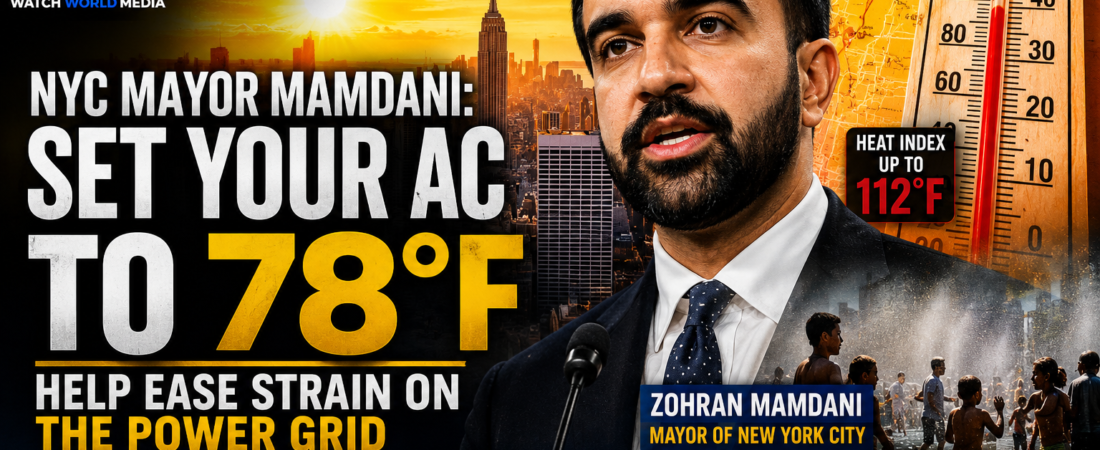
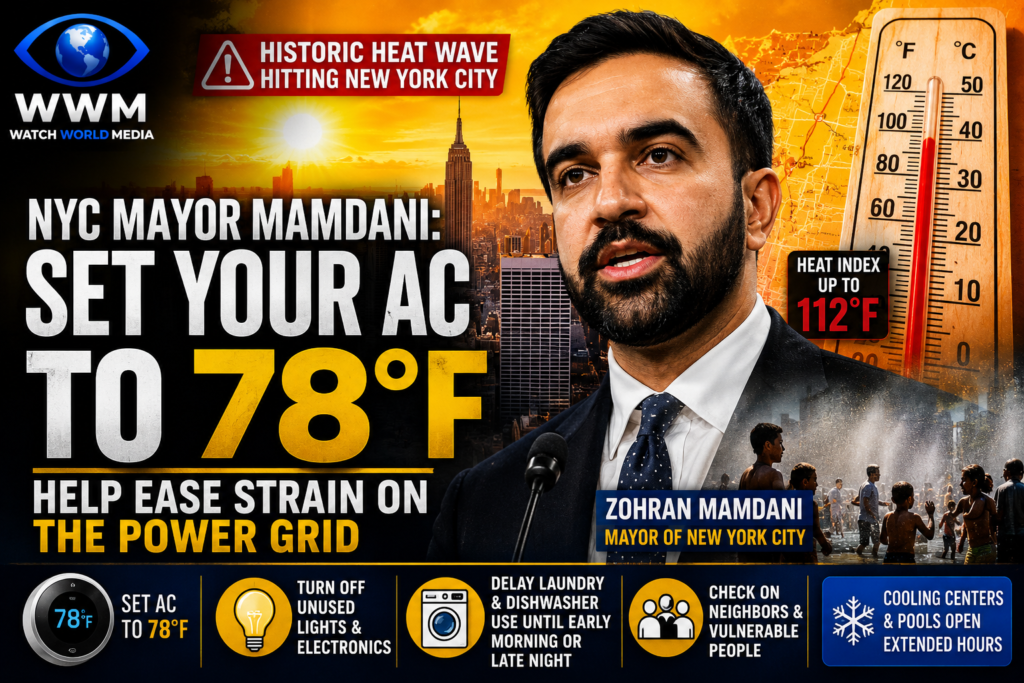
New York City, USA – July 2, 2026 — As a powerful heat wave grips the U.S. East Coast, New York City Mayor Zohran Mamdani is urging residents to conserve electricity by setting their air conditioners to 78°F (26°C) and reducing unnecessary energy use to help prevent strain on the city’s power grid.
The appeal comes as temperatures climb into the upper 90s and low 100s Fahrenheit, with heat index values expected to exceed 110°F (43°C) in some areas. Energy officials have warned that soaring electricity demand for air conditioning could place significant pressure on the grid during peak afternoon hours.
Mayor Mamdani said the city is leading by example, directing municipal buildings, libraries, and other public facilities to maintain indoor temperatures at 78°F while encouraging businesses and households to adopt the same practice.
“Simple actions taken by millions of New Yorkers can make a meaningful difference in keeping the power on for everyone during this extreme heat,” city officials said.
Energy Conservation Measures
Residents are being encouraged to:
- Set air conditioners to 78°F (26°C) whenever possible.
- Turn off lights, televisions, and electronics when not in use.
- Delay energy-intensive activities such as laundry, dishwashing, and charging electric vehicles until early morning or late evening.
- Keep blinds and curtains closed during the hottest parts of the day to reduce indoor heat.
Officials say these measures can significantly lower electricity demand while still keeping homes reasonably comfortable.
Heat Emergency Response
The conservation campaign is part of New York City’s broader heat emergency plan, which includes:
- Expanded cooling centers across the city.
- Extended operating hours at public libraries and community centers.
- Public swimming pools remaining open longer.
- Outreach programs to assist elderly residents and other vulnerable populations.
- Public reminders encouraging neighbors to check on those most at risk of heat-related illness.
Authorities continue to warn that prolonged exposure to extreme temperatures can lead to dehydration, heat exhaustion, and heat stroke, particularly among seniors, young children, and individuals with underlying health conditions.
Mixed Public Reaction
The recommendation has generated widespread discussion online. Supporters argue that modest adjustments to thermostat settings are a practical way to reduce demand and help avoid widespread blackouts during periods of extreme heat.
Critics, however, have questioned whether maintaining indoor temperatures at 78°F is realistic during unusually hot weather, with some political commentators describing the guidance as impractical for many households.
Despite the debate, energy experts note that similar conservation requests have been issued by cities and utilities across the United States during previous heat emergencies, citing their effectiveness in reducing peak electricity demand.
Looking Ahead
Meteorologists expect the heat wave to persist through the Independence Day holiday weekend before cooler conditions gradually return. Until then, city officials continue to urge residents to stay hydrated, limit outdoor activities during peak afternoon hours, and follow energy conservation recommendations to help maintain a stable power supply.
As extreme weather events become increasingly frequent, officials say coordinated public cooperation will play an important role in protecting both public health and critical infrastructure.
WWM Watch World Media will continue to monitor developments surrounding the ongoing heat emergency and provide updates on weather conditions, public safety measures, and energy impacts across the United States.