
By Watch World Media
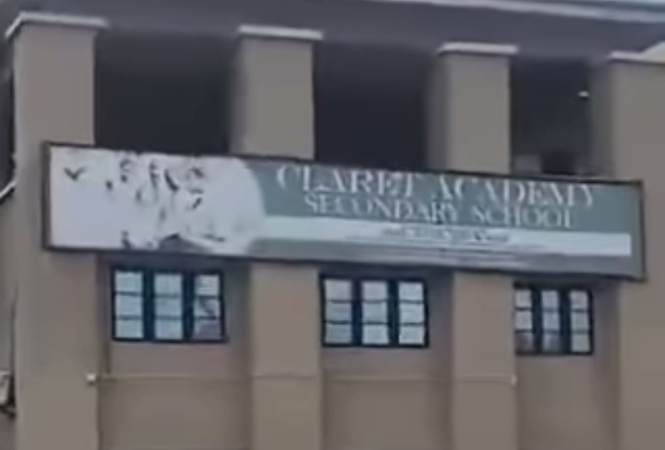
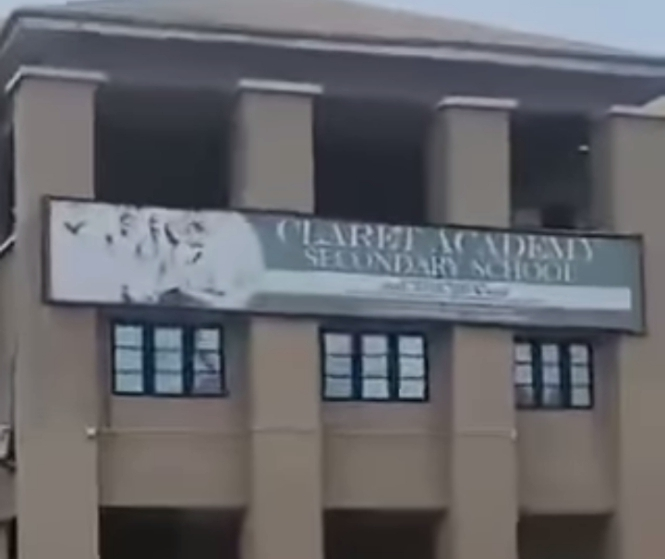
OWERRI, IMO STATE — A heated confrontation between the Imo State Commissioner for Primary and Secondary Education, Professor Bernard Thompson Ikegwuoha, and a Catholic priest at Claret Academy, New Owerri, has sparked nationwide debate after a video of the incident went viral across social media platforms.
The incident reportedly occurred in late May 2026 during the Eid al-Adha public holiday period, when schools across Nigeria were expected to suspend academic activities in compliance with government directives. However, according to reports and footage circulating online, Claret Academy remained operational, prompting an unscheduled visit by the commissioner.
Upon arriving at the school, Professor Ikegwuoha reportedly discovered a group of students kneeling on the ground as punishment for arriving late to school. The commissioner immediately challenged the disciplinary measure, questioning the priest in charge and reminding school authorities of the state’s prohibition on corporal punishment.
In the now-viral video, the commissioner is heard asking, “Why did you tell these students to kneel down? I abolished corporal punishment in schools.” He subsequently ordered the immediate closure of the school for the holiday period and directed students to return home.
The confrontation has quickly become one of the most discussed education-related incidents in Nigeria this year, generating strong reactions from educators, parents, religious groups, and child rights advocates.
Enforcement of State Education Policy
The incident is closely linked to the education reform agenda introduced by Professor Ikegwuoha since assuming office.
In April 2025, the commissioner announced a statewide ban on corporal punishment in public schools, declaring that practices such as flogging, slapping, forcing students to kneel, and other forms of physical discipline were no longer acceptable in modern educational settings.
At the time, he argued that discipline should be rooted in mentorship, counseling, guidance, and constructive engagement rather than physical or humiliating punishments.
According to the policy, teachers and school administrators are encouraged to adopt alternative disciplinary methods designed to promote behavioral correction while preserving the dignity and psychological well-being of students.
Although the original directive focused primarily on public schools, recent actions by the commissioner suggest that private institutions operating within the state are also expected to comply with child protection standards established by the government.
School Operating During Public Holiday Raises Questions
Beyond the punishment issue, authorities have also raised concerns regarding the school’s decision to continue academic activities during the Eid al-Adha holiday period.
Government officials reportedly viewed the school’s operation as a violation of official closure directives issued for the public holiday.
During the confrontation, the commissioner warned that schools found disregarding government regulations could face sanctions, including administrative investigations and possible threats to their operational licenses.
Education officials have not yet publicly disclosed the full extent of any sanctions that may be imposed on Claret Academy, but reports indicate that the institution has been listed among schools facing further scrutiny.
Public Reaction Divided
The incident has triggered intense debate across social media and public forums.
Supporters of the commissioner argue that the action demonstrates the government’s commitment to protecting students from practices they consider degrading, outdated, or harmful.
Many child rights advocates have applauded the intervention, stating that forcing children to kneel as punishment can negatively affect their self-esteem and emotional development. They believe schools should adopt modern disciplinary systems that focus on accountability without physical discomfort or public humiliation.
Others, however, have criticized the manner in which the confrontation was handled.
Some commentators argue that publicly challenging a priest in front of students and staff may have undermined institutional authority and could have been addressed through private dialogue.
Critics also note that kneeling as punishment has long been a common disciplinary practice in many Nigerian schools and religious institutions. They question whether the measure should be categorized alongside more severe forms of corporal punishment such as flogging or physical assault.
Several observers have called for broader consultations involving educators, parents, faith-based organizations, and child welfare experts to establish disciplinary guidelines that balance student rights with classroom order.
Child Rights Versus Traditional Discipline
The controversy highlights a growing national conversation about how discipline should be enforced in schools.
Across Nigeria and many parts of Africa, traditional disciplinary methods have historically included kneeling, manual labor, standing for extended periods, and physical punishment. However, child protection advocates increasingly argue that such practices should be replaced with restorative and educational approaches.
Education experts note that many countries have shifted toward disciplinary systems focused on counseling, detention, parental engagement, community service, behavioral contracts, and conflict-resolution programs.
The debate in Imo State reflects a broader challenge facing education systems: how to maintain discipline while respecting children’s rights and evolving international standards on child welfare.
Commissioner’s Education Reform Agenda
Professor Bernard Thompson Ikegwuoha has been one of the most visible education officials in Imo State in recent years.
A respected academic with a background in Political Science, he has overseen reforms aimed at improving educational standards, enhancing teacher quality, recruiting qualified personnel, and reducing financial burdens on parents.
The administration of Governor Hope Uzodimma has repeatedly emphasized its commitment to restoring Imo State’s reputation as one of Nigeria’s leading educational centers.
Government officials argue that strengthening child protection measures forms part of that broader objective.
Looking Ahead
As the video continues to circulate online, attention is now focused on whether further action will be taken against Claret Academy and whether the incident could influence disciplinary policies in schools across Nigeria.
The controversy has reopened important questions about authority, discipline, religious autonomy, government oversight, and child rights—issues that are likely to remain at the center of public discussion in the weeks ahead.
For now, the incident serves as a powerful reminder of the changing landscape of education in Nigeria, where traditional disciplinary practices are increasingly being challenged by modern child-protection standards.
Watch World Media will continue to monitor developments and provide updates as more information becomes available.