
By watch world media
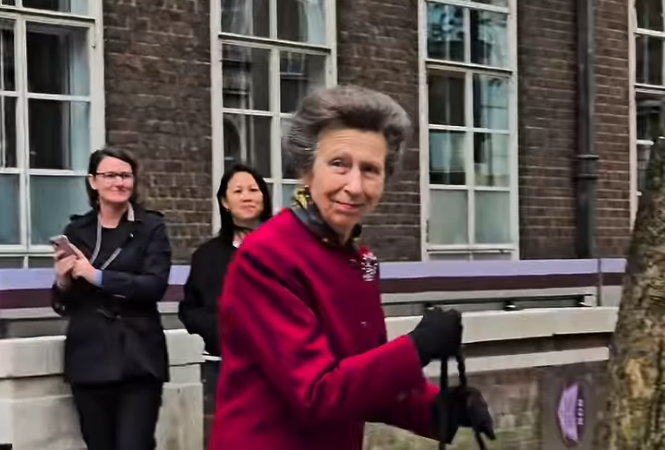
Among the many members of the British royal family, few command as much respect for discipline, dedication, and unwavering public service as Her Royal Highness The Princess Royal, Princess Anne. Known for her tireless work ethic, straightforward personality, and decades of loyal service to the Crown, Princess Anne has become one of the most admired and dependable figures within the monarchy.
As the only daughter of Queen Elizabeth II and Prince Philip, Duke of Edinburgh, Princess Anne has spent virtually her entire life in the public eye. Yet despite being born into extraordinary privilege and global attention, she has built a reputation based less on glamour and publicity and more on hard work, resilience, and duty.
Early Life and Royal Background
Princess Anne was born on 15 August 1950 at Clarence House in London. She was the second child of then-Princess Elizabeth and Prince Philip and became the first daughter born to a future British monarch in centuries.
Her early years unfolded during a transformative period for the monarchy. When her mother ascended to the throne as Queen Elizabeth II in 1952, Anne became part of a new royal era that would define modern Britain for decades.
She grew up alongside her elder brother, now King Charles III, as well as her younger brothers, Prince Andrew and Prince Edward. Although she was third in line to the throne at birth, constitutional changes and the expansion of the royal family have since moved her further down the succession line.
Princess Anne received early tutoring at Buckingham Palace before attending Benenden School in Kent, one of Britain’s leading boarding schools for girls. Even during her youth, she was known for her intelligence, independence, and determination.
A defining passion quickly emerged during her childhood: horses and equestrian sport.
Excellence in Equestrian Sports
Princess Anne developed into an accomplished equestrian athlete and became one of the most successful sportswomen ever produced by the British royal family.
She trained extensively in eventing — a demanding discipline combining dressage, cross-country riding, and show jumping. Her dedication led to major competitive success in the early 1970s.
In 1971, she won individual gold at the European Eventing Championships, cementing her status as a serious athlete rather than simply a royal hobbyist. She later represented Great Britain at the 1976 Montreal Olympic Games, becoming the first member of the British royal family to compete in the Olympics.
Her achievements helped elevate public interest in equestrian sports across the United Kingdom and inspired future generations of riders.
The Princess Royal remained deeply involved in the equestrian world long after her competitive career slowed, serving in leadership and ambassadorial roles connected to horse sports and Olympic organizations.
Her daughter, Zara Tindall, later followed in her footsteps by becoming an Olympic equestrian medalist, continuing the family’s strong sporting legacy.
A Life Defined by Duty
While many royals attract attention through ceremony and celebrity, Princess Anne has become best known for her extraordinary commitment to public service.
She began undertaking official royal engagements in 1969 at the age of 18 and quickly established herself as one of the monarchy’s hardest-working members. Over the decades, she has consistently carried out hundreds of engagements each year, often exceeding the schedules of younger royals.
Her charitable and public work spans a wide range of causes, including:
- Education and youth development.
- Agriculture and rural affairs.
- Healthcare and medical charities.
- Sports organizations.
- International humanitarian work.
- Maritime and military associations.
Princess Anne has served as patron, president, or supporter of more than 200 organizations throughout her life. Among the most notable is her long-standing involvement with Save the Children UK, where she has worked for decades advocating for children’s welfare, education, and humanitarian relief efforts globally.
Unlike some public figures who seek media attention, Anne is widely respected for focusing on practical work rather than publicity. She often performs engagements with little fanfare, earning admiration for her consistency and professionalism.
The Title of Princess Royal
In 1987, Queen Elizabeth II formally granted Anne the title of Princess Royal, one of the highest honours traditionally bestowed upon the monarch’s eldest daughter.
The title is not automatic and can only be held by one person at a time. Princess Anne became the seventh woman in British history to receive it.
The role symbolizes her unique position within the royal family and recognizes her decades of service to the Crown.
Family Life and Personal Choices
Princess Anne married Captain Mark Phillips in 1973 in a ceremony watched by millions around the world. Phillips, an accomplished equestrian and Olympic gold medalist, shared Anne’s passion for horse riding.
The couple had two children:
- Peter Phillips, born in 1977.
- Zara Phillips (now Zara Tindall), born in 1981.
In a highly notable decision, Anne and Mark Phillips chose not to accept royal titles for their children. This allowed Peter and Zara to grow up with greater independence and pursue careers outside formal royal life.
The decision has often been praised as practical and forward-thinking, helping both children maintain relatively normal personal and professional lives.
After Anne and Mark Phillips divorced in 1992, the Princess Royal married Commander Timothy Laurence later that same year in a private ceremony in Scotland. Their marriage has remained stable and largely private, with Laurence frequently supporting Anne during official duties.
The 1974 Kidnapping Attempt
One of the most dramatic moments in Princess Anne’s life occurred in March 1974 when a gunman attempted to kidnap her near Buckingham Palace.
The attacker stopped Anne’s car on Pall Mall in London, shooting and injuring several people during the incident. He demanded that the princess leave the vehicle.
Anne famously resisted with remarkable calmness and courage. According to reports, she repeatedly refused the kidnapper’s demands, responding with the now-famous phrase: “Not bloody likely.”
The failed kidnapping attempt shocked Britain and highlighted Anne’s composure under extreme pressure. Her bravery during the incident further strengthened public respect for her character.
Personality and Public Reputation
Princess Anne has long been regarded as one of the monarchy’s most direct and no-nonsense figures.
Unlike some royals who carefully cultivate media-friendly images, Anne is known for her blunt honesty, dry wit, and practical approach to royal life. Although her reserved demeanor has occasionally led to portrayals of her as stern or grumpy, many members of the public view her authenticity as refreshing.
She rarely seeks headlines and generally avoids controversy, preferring to focus on her responsibilities rather than public relations.
This understated style has contributed significantly to her enduring popularity and credibility.
Supporting the Modern Monarchy
As of 2026, Princess Anne continues to play a central role in supporting King Charles III and the wider royal institution.
Even into her mid-70s, she remains one of the busiest working royals, attending ceremonies, visiting charities, representing the Crown abroad, and participating in state occasions.
At a time when the monarchy faces ongoing public scrutiny and modernization pressures, Anne is often viewed as a symbol of continuity, discipline, and traditional public service.
Many royal observers and historians regard her as one of the most dependable and respected members of the House of Windsor — a figure whose contributions have often been substantial despite receiving less public attention than other senior royals.
Legacy of Service
Princess Anne’s life reflects a rare combination of royal responsibility, personal resilience, athletic achievement, and public duty.
Over more than five decades, she has earned admiration not through spectacle or celebrity, but through relentless commitment to service. Whether representing Britain abroad, supporting charitable organizations, excelling in international sport, or standing firmly beside her family during periods of change, the Princess Royal has demonstrated an enduring sense of purpose.
Her legacy is likely to be remembered as one of steadfast devotion to the Crown and country — a royal figure defined not by glamour, but by discipline, integrity, and duty.