
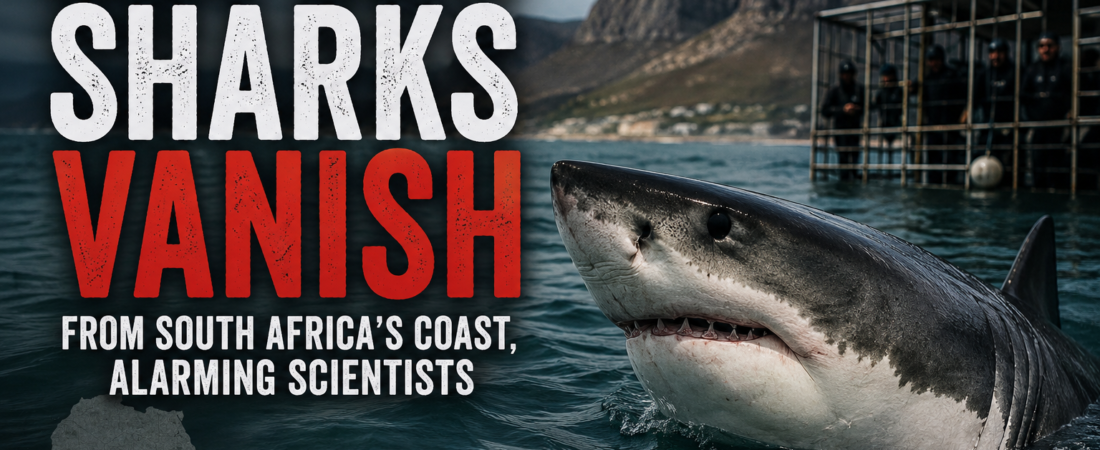
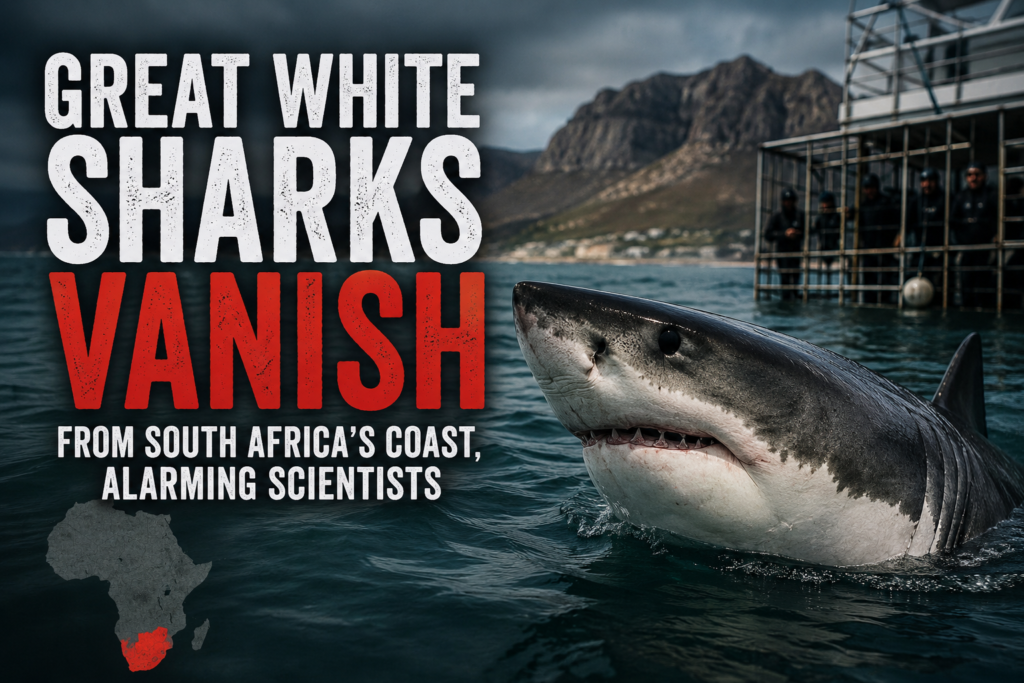
The waters off South Africa’s Cape coastline were once among the most famous great white shark habitats on Earth. Tourists traveled from around the world to places like False Bay and Gansbaai to witness the ocean’s most feared predator breaching from the water during shark cage dives. Today, however, those same waters have become eerily quiet.
Scientists, conservationists, and marine tour operators are now sounding the alarm as great white shark sightings along parts of South Africa’s coast have dramatically declined. The mysterious disappearance has sparked global concern and an intense scientific debate over what is driving these apex predators away.
A Sudden Collapse in Sightings
According to marine experts interviewed by Reuters and CBS News, great white sharks began vanishing from traditional hotspots more than a decade ago. Areas that once recorded hundreds of sightings each year now report almost none. Shark photographer Chris Fallows, who spent decades documenting great whites in South Africa, said the change has been shocking.
Tour operators who relied on shark tourism say encounters that were once daily events have become rare occurrences. Some cage-diving businesses have struggled to survive as tourists no longer see the predators that made the region famous.
The Orca Theory
One of the leading explanations centers on a pair of killer whales — orcas nicknamed “Port” and “Starboard.” Researchers first became suspicious after shark carcasses began washing ashore with precise wounds and missing livers. Necropsies later confirmed that orcas were attacking and feeding on great white sharks.
Marine biologist Alison Kock and other researchers believe these highly intelligent predators may have terrified great whites into abandoning their traditional habitats. Orcas are known to target shark livers because they are rich in nutrients and energy. Evidence suggests the attacks may have disrupted the sharks’ behavior across large sections of the coastline.
In one extraordinary incident documented in 2023, a lone orca was filmed killing a great white shark in under two minutes — behavior scientists described as “unprecedented.”
Human Activity May Also Be Responsible
Not all scientists agree that orcas are the main cause. Another group of researchers argues that humans are the bigger threat.
Marine biologist Enrico Gennari and others believe overfishing has severely reduced the sharks’ food supply. Commercial longline fishing targeting smaller shark species may be depriving great whites of prey, forcing them to migrate elsewhere.
Shark nets and baited hooks installed to protect swimmers are also blamed for killing sharks unintentionally. Critics say these outdated protection systems harm marine life and contribute to population decline.
Climate change may be adding further pressure by altering ocean temperatures and marine ecosystems. Some scientists believe multiple factors — not just one — are driving the disappearance.
Why Great White Sharks Matter
Great white sharks play a crucial role in maintaining balance within ocean ecosystems. As apex predators, they regulate populations of seals and other marine animals, helping stabilize the food chain. Their disappearance could trigger cascading ecological consequences across South Africa’s coastal waters.
Researchers also warn that losing such an iconic predator would represent a major conservation failure. South Africa became one of the first countries in the world to protect great white sharks in 1991, but experts fear local populations may now face serious long-term risks.
Tourism and Coastal Communities Feeling the Impact
The decline is affecting more than marine biology. Entire tourism industries built around shark diving have suffered financially. Towns once known as global shark tourism capitals are seeing fewer visitors as sightings become increasingly rare.
At the same time, scientists continue searching for solutions that balance marine conservation with public safety. Some experts advocate replacing lethal shark nets with non-harmful technologies such as shark spotters, drones, magnetic deterrents, and eco-friendly barriers.
An Ocean Mystery Still Unfolding
Despite years of research, no single explanation fully accounts for the disappearance of South Africa’s great white sharks. Orca predation, overfishing, climate shifts, and human intervention may all be interacting in complex ways.
What is clear is that one of the world’s most iconic marine predators is rapidly disappearing from a coastline where it once ruled the seas — and scientists are racing to understand why before it is too late.