
By Watch World Media | June 8, 2026
General Santos City, Philippines — A devastating 7.8-magnitude earthquake struck off the southern coast of the Philippines early Monday morning, killing at least 32 people, injuring more than 200, damaging critical infrastructure, and triggering tsunami warnings across parts of Asia.
The powerful quake hit at approximately 7:37 a.m. local time, with its epicenter located offshore near Sarangani Province, south of General Santos City on the island of Mindanao. Philippine and international seismic agencies reported a depth of roughly 33–35 kilometers, making the tremor particularly destructive.
Residents across Mindanao described violent shaking that lasted for nearly a minute, sending thousands of people fleeing homes, schools, offices, and shopping centers.
Buildings Collapse Across General Santos
General Santos City, one of the largest urban centers in southern Philippines, suffered some of the worst damage.
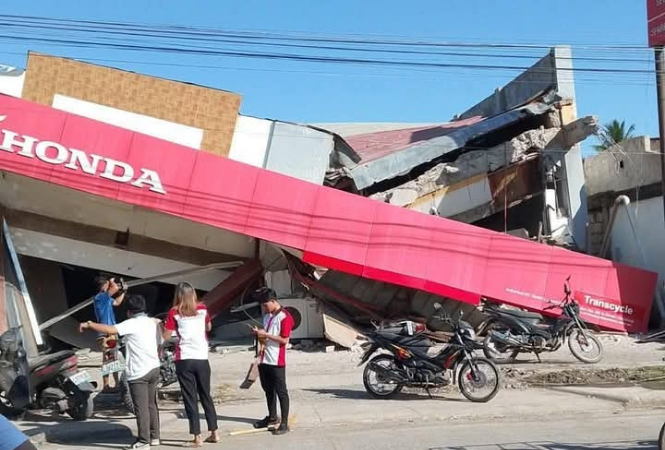
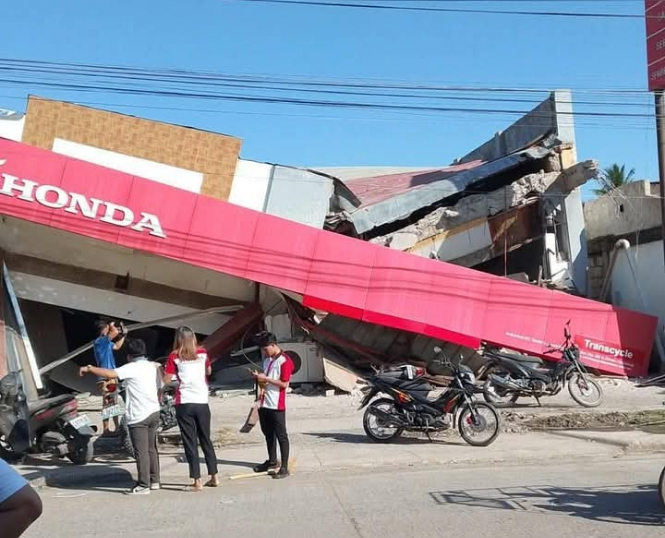
Several commercial buildings collapsed or sustained severe structural damage, including a well-known Jollibee restaurant that partially crumbled during the quake. Hospitals, schools, businesses, and residential structures were also affected as emergency crews rushed to rescue trapped victims.
Authorities reported widespread power outages, damaged roads, and disruptions to communications infrastructure throughout the region. Initial government estimates suggest property damage in General Santos alone could exceed one billion Philippine pesos.
Death Toll Expected to Rise
As search-and-rescue operations continue, officials warn that casualty numbers could increase.
At least 32 deaths and more than 200 injuries have been confirmed, with many victims killed by collapsing buildings, falling debris, and landslides triggered by the quake. Several people remain missing as rescue teams work through damaged structures and isolated communities.
One of the deadliest incidents occurred in Sarangani Province, where a landslide claimed multiple lives. Other fatalities were reported in South Cotabato, Davao Occidental, and surrounding areas.
Tsunami Warning Sparks Coastal Evacuations
The earthquake triggered tsunami alerts across the Philippines and parts of neighboring countries, including Indonesia and Malaysia.
Emergency authorities ordered residents in vulnerable coastal areas to move to higher ground as a precaution. A tsunami measuring approximately one meter (three feet) was later recorded along sections of the southern Philippine coastline, causing localized damage to coastal communities and structures.
The Pacific Tsunami Warning Center later downgraded and eventually lifted the threat after determining that larger waves were unlikely.
Hundreds of Aftershocks Keep Residents on Edge
More than 200 aftershocks have been recorded since the initial earthquake, including several powerful tremors exceeding magnitude 6.0. Authorities have warned residents not to re-enter damaged buildings due to the continued risk of collapse.
Schools, government offices, and transportation hubs throughout parts of Mindanao have suspended operations while engineers assess structural safety.
The earthquake struck on what was scheduled to be the first day of classes for many students, leading to chaotic evacuations across schools in the region.
Government Mobilizes Emergency Response
Philippine President Ferdinand Marcos Jr. ordered the immediate deployment of military units, disaster-response teams, medical personnel, and humanitarian assistance to affected areas. Emergency shelters have been established for thousands of displaced residents.
International organizations and neighboring countries are monitoring the situation closely, with aid offers expected as damage assessments continue.
One of the Strongest Quakes in Decades
Seismologists have described the event as one of the most powerful earthquakes to strike the Philippines in recent decades.
The country sits along the Pacific Ring of Fire, a region known for intense seismic and volcanic activity. While earthquakes are common, the scale of Monday’s disaster has drawn global attention due to its strength, widespread destruction, and significant loss of life.
Rescue operations remain ongoing, and officials expect updated casualty and damage figures in the coming days.
Watch World Media will continue to provide updates as emergency crews work to reach affected communities and assess the full scope of the disaster.