
Reported by Watch World Media
WASHINGTON, D.C. — has emphasized the growing security partnership between the United States and Nigeria, pointing to recent joint counterterrorism operations while acknowledging longstanding international concerns over violence affecting Christian communities in the country.
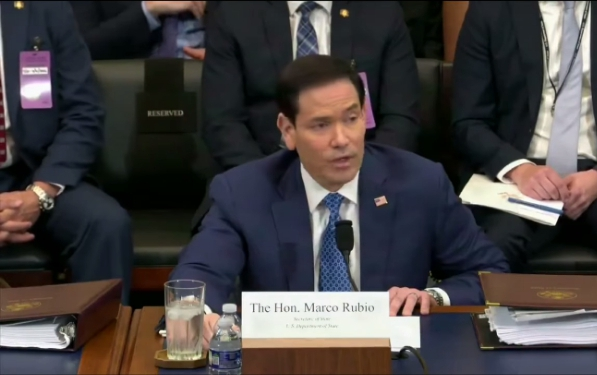
During congressional testimony before the on June 3, Rubio discussed expanding cooperation between American and Nigerian security forces in combating extremist groups operating across West Africa.
“On Nigeria, where many were very concerned about violence against Christians, we are now actively in counterterrorism cooperation with the Nigerian government and Nigerian security forces,” Rubio stated.
The secretary added that the cooperation recently included a joint operation that eliminated a senior ISIS figure operating from inside Nigeria.
Joint Counterterrorism Operation
According to Rubio’s remarks, U.S. and Nigerian forces collaborated in a recent mission targeting a high-ranking member of an ISIS-affiliated organization active in the region.
While officials have not publicly released all operational details, reports indicate the mission targeted a senior extremist leader linked to ISIS operations in West Africa.
Both and Nigerian President have reportedly praised the operation as an example of successful international security cooperation.
The operation reflects a broader U.S. strategy focused on intelligence-sharing, targeted counterterrorism efforts, and support for allied regional forces confronting jihadist insurgencies.
Ongoing Security Challenges in Nigeria
Nigeria continues to face complex security threats involving multiple armed groups across different regions of the country.
These include:
- insurgents in northeastern Nigeria
- militants
- Armed bandit groups
- Ethno-religious violence in parts of the Middle Belt region
Religious freedom advocates and international watchdog organizations have repeatedly warned about violence affecting Christian communities, particularly in rural and conflict-prone areas.
Nigeria has previously been designated by the United States as a Country of Particular Concern regarding religious freedom issues under earlier administrations.
Shift Toward Security Cooperation
Rubio’s comments suggest the Trump administration is placing increased emphasis on direct counterterrorism collaboration with Nigeria as part of broader efforts to combat transnational extremist networks in Africa.
Analysts say the approach reflects a pragmatic security-focused policy that prioritizes operational cooperation against jihadist threats while balancing ongoing concerns regarding human rights and religious freedom.
Supporters argue that strengthening Nigeria’s counterterrorism capabilities is critical given the country’s strategic importance and the growing influence of extremist groups across the Sahel and West Africa.
Human Rights Concerns Remain
Despite expanded security cooperation, human rights organizations continue calling for accountability and reforms within Nigerian security institutions.
Critics have pointed to past allegations involving:
- Civilian casualties during military operations
- Excessive use of force
- Weak accountability mechanisms
- Insufficient protection for vulnerable religious and ethnic communities
Advocates argue that counterterrorism efforts must be paired with stronger governance, justice reforms, and protections for civilians to achieve long-term stability.
Strategic Importance of Nigeria
As Africa’s most populous country and one of its largest economies, remains a key strategic partner for the United States in regional security, energy, and economic matters.
American officials increasingly view instability in West Africa as a growing global security concern due to:
- Expanding jihadist networks
- Cross-border trafficking
- Political instability in neighboring states
- Foreign influence from rival powers
The U.S.-Nigeria partnership has therefore become an increasingly important component of broader American engagement on the African continent.
Looking Ahead
Rubio’s testimony signals that counterterrorism cooperation between Washington and Abuja is likely to deepen further in the months ahead.
At the same time, debates continue over how best to balance security partnerships with concerns surrounding religious violence, civilian protection, and governance reforms.
As extremist threats evolve across the region, both countries appear committed to expanding operational coordination while facing ongoing scrutiny from international observers and human rights advocates.
Reporting from Washington, D.C., this is Watch World Media.
Watch World Media will continue bringing coverage on global counterterrorism efforts, international diplomacy, and the security challenges shaping Africa and the wider world.