
Ministers Face Growing Pressure as Expert Panel Rejects Nationwide Prostate Cancer Screening Programme
By Watch World Media Health Desk
LONDON — June 1, 2026
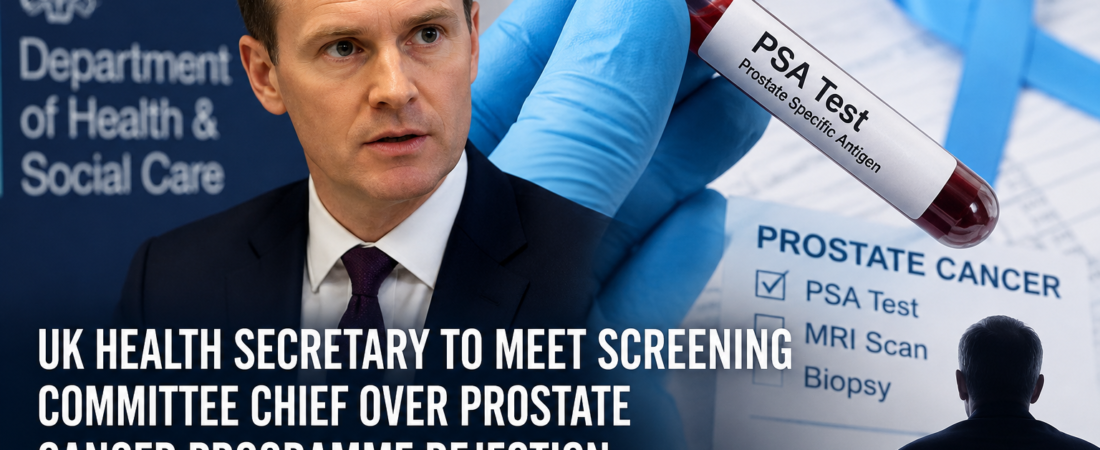
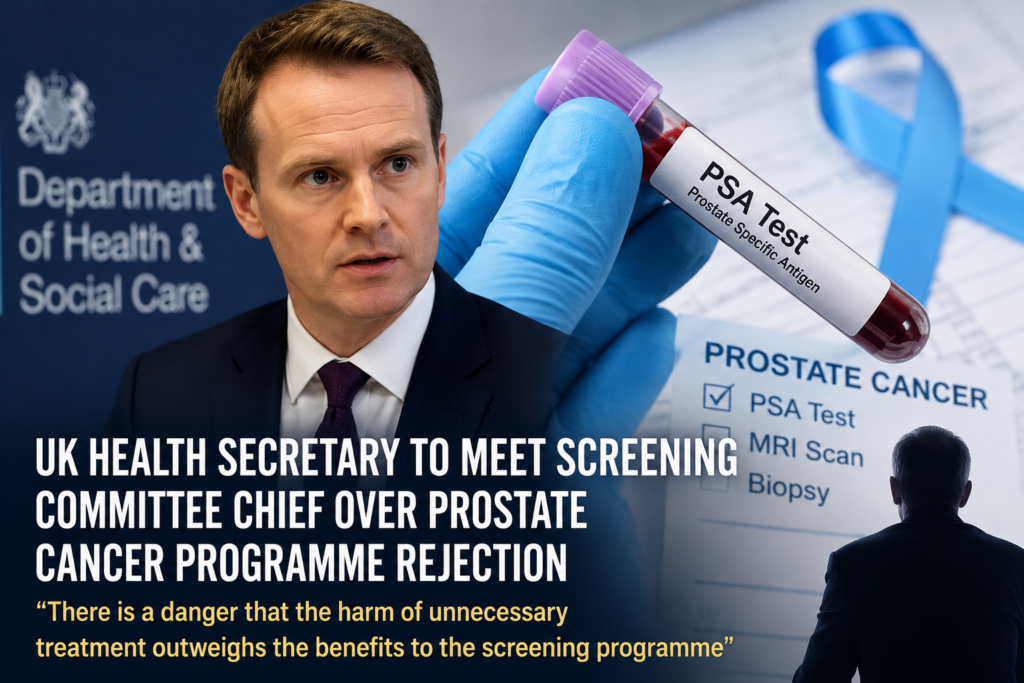
The future of prostate cancer screening in the United Kingdom is under intense scrutiny as Health Secretary James Murray prepares to meet with the head of the UK National Screening Committee (UKNSC) following the committee’s controversial decision to reject a nationwide screening programme.
The meeting, scheduled for Monday, comes amid mounting pressure from cancer charities, medical experts, Members of Parliament, and prominent public figures who argue that broader screening could help save thousands of lives through earlier detection.
At the centre of the debate is a fundamental question confronting healthcare systems worldwide: how can governments identify cancer earlier while avoiding unnecessary treatment and harm to patients?
Expert Panel Rejects Nationwide Screening
In its final guidance published on May 28, 2026, the UK National Screening Committee concluded that existing evidence does not support introducing a population-wide prostate cancer screening programme for men across the country.
The committee warned that while screening has the potential to identify cancers earlier, widespread testing could also lead to significant overdiagnosis and overtreatment.
According to the committee, many prostate cancers detected through screening grow so slowly that they may never become life-threatening during a man’s lifetime. Detecting and treating such cancers unnecessarily can expose patients to potentially serious side effects without providing substantial health benefits.
One of the key concerns highlighted by the committee was that:
“There is a danger that the harm of unnecessary treatment outweighs the benefits of the screening programme.”
That assessment ultimately formed a central part of the recommendation against universal screening.
Limited Programme for High-Risk Men
While rejecting broad population screening, the UKNSC did recommend a more targeted approach aimed at a specific high-risk group.
Under the proposal, eligible men would be offered prostate-specific antigen (PSA) blood tests every two years if they meet the following criteria:
- Aged between 45 and 61 years
- Carry a confirmed pathogenic BRCA2 genetic variant
- Have a family history of breast, ovarian, pancreatic, or prostate cancer
Health experts estimate that only a few thousand men each year would qualify under the proposed programme.
The committee concluded that current evidence supports screening only within this narrowly defined group because they face a substantially elevated risk of developing aggressive prostate cancer.
Why PSA Testing Remains Controversial
The debate largely centres on the limitations of the PSA blood test, which measures levels of prostate-specific antigen in the bloodstream.
Although elevated PSA levels can indicate prostate cancer, they may also result from non-cancerous conditions such as infection, inflammation, or an enlarged prostate.
The test can also identify cancers that might never progress or cause symptoms, creating a challenge for doctors and patients deciding whether treatment is necessary.
Experts warn that treatment for prostate cancer can sometimes result in long-term complications, including:
- Urinary incontinence
- Erectile dysfunction
- Bowel complications
- Psychological distress and anxiety
Supporters of the committee’s recommendation argue that avoiding unnecessary interventions protects patients from these life-changing side effects.
Professor Anneke Lucassen, a member of the screening committee and Professor of Genomic Medicine at the University of Oxford, stated that the strongest evidence supporting screening benefits currently exists only among men carrying the BRCA2 genetic mutation.
Growing Opposition to the Decision
The recommendation has sparked immediate criticism from campaign groups and healthcare advocates who believe the committee’s approach is too cautious.
Prostate Cancer UK expressed disappointment with the decision, arguing that limiting screening to a very small group could mean missed opportunities to diagnose cancer earlier in thousands of men.
Campaigners point out that prostate cancer remains one of the leading causes of cancer-related deaths among men in the United Kingdom, claiming more than 12,000 lives every year.
Many advocates argue that advances in medical imaging, particularly MRI technology, have significantly improved the ability to distinguish dangerous cancers from less aggressive forms, potentially reducing the risks associated with widespread screening.
Some specialists believe combining PSA testing with MRI assessments could provide a more effective and safer screening strategy than relying on PSA testing alone.
Political Pressure Intensifies
The controversy has now moved beyond the medical community and into the political arena.
More than 120 Members of Parliament have reportedly expressed support for expanding prostate cancer screening programmes.
Among those advocating for broader action are former Prime Minister Rishi Sunak and former Prime Minister Lord David Cameron, who has spoken publicly about his own prostate cancer diagnosis.
Supporters of expanded screening argue that modern healthcare should focus on earlier diagnosis and prevention rather than waiting for symptoms to appear.
They are urging ministers to reconsider the committee’s recommendation and explore wider screening options.
Government Yet to Decide
Despite the recommendation from the UKNSC, the final decision does not automatically become government policy.
Health Secretary James Murray is expected to carefully review the findings before determining the government’s response.
A spokesperson for the Department of Health and Social Care confirmed that ministers are giving the recommendation detailed consideration and will provide an update in due course.
The upcoming meeting between Murray and Professor Sir Mike Richards is expected to play a significant role in shaping the next steps.
What Happens Next?
Even if ministers approve the committee’s proposed targeted screening programme, implementation could take several years due to the logistical and clinical requirements involved.
Meanwhile, debate is likely to continue over whether advances in medical technology have altered the balance between the benefits and risks of prostate cancer screening.
For many families affected by the disease, the issue is deeply personal. For policymakers, it remains one of the most challenging public health decisions currently facing the National Health Service.
As the government weighs expert advice against growing public pressure, the outcome could shape prostate cancer detection and treatment strategies across the United Kingdom for years to come.
Watch World Media will continue following developments from the Health Secretary’s meeting and provide updates on any government decision regarding prostate cancer screening policy.